




Electrolytes: A Simple Guide to Staying Hydrated
Electrolytes are everywhere on sports drink labels. But what are they, really, and when do you need more than water? Here is a simple guide.
What are electrolytes?
Electrolytes are minerals your body uses to keep its fluids in balance and help muscles and nerves do their job. They get their name because, once dissolved in the body's fluids, they carry a small electric charge. The main ones are sodium, potassium, chloride, calcium and magnesium, and they are found naturally in many foods and drinks.
What you lose when you sweat
Sweat is mostly water, but it also contains electrolytes. Sodium is the main electrolyte lost in sweat; potassium is lost too, but in smaller amounts. How much you sweat varies a lot from one person to another, depending on the intensity of the effort, the heat, the humidity and your own physiology.
Water or sports drink?
For most everyday activities, water and regular meals and snacks are enough to meet your fluid and electrolyte needs. A sports drink can be useful in some situations:
- Sustained exercise lasting more than about 60 minutes, like a long run, a bike ride or a tournament;
- Exercise in heat and humidity, when you sweat a lot;
- When you can't eat or drink normally during a long day of training or competition.
Sports medicine organizations recommend drinking regularly during long efforts to limit fluid loss, without drinking excessively, and adapting your intake to your own needs. If you have specific needs, talk to a health professional or a sports dietitian.
How to read a label
- Sodium: it's the electrolyte to look for after a long, sweaty effort.
- Sugars: check how many grams per bottle, and whether they are added sugars.
- Ingredient list: the shorter it is, the easier it is to know what you're drinking. Watch for colourings and artificial sweeteners if you prefer to avoid them.
Maple 3 Sports: four ingredients
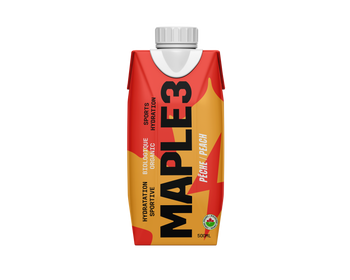
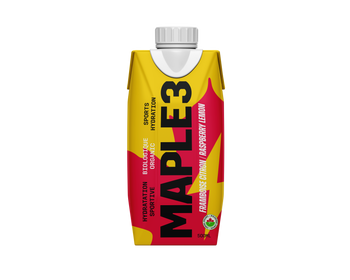
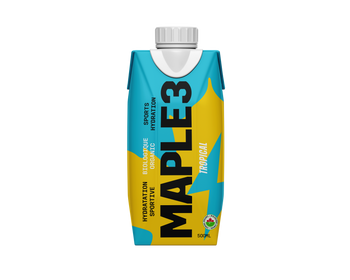
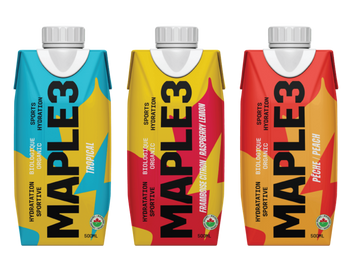
Maple 3 Sports is made with organic maple water, a touch of salt, citric acid and natural flavours, with no added sugar or colouring. Each 500 ml bottle contains 60 calories and 280 mg of sodium.
A word on sugar
During long efforts, carbohydrates are a source of energy for your muscles. That is why many sports drinks contain sugar. So it's worth checking where the sugar comes from.
In Maple 3 Sports, the 14 g of sugars per bottle come only from the maple water. There is no added sugar, syrup or sweetener. Maple water is the sap of the maple tree. We collect and filter it without boiling it, so its sugars stay in their natural, unrefined form, alongside the minerals naturally present in the water.
What is in maple water? According to analyses by Centre ACER, Quebec’s maple research centre, maple water straight from the tree contains on average about 2.3 g of sugars per 100 ml. Almost all of it is sucrose, with only traces of glucose and fructose. It also contains small amounts of minerals (potassium, calcium, magnesium, manganese, zinc, copper), organic acids such as malic acid, amino acids and more than 25 phenolic compounds.

Learn more: Maple water vs. coconut water. Discover Maple 3 Sports →
Sources
- American College of Sports Medicine (2007). Position stand: Exercise and fluid replacement. Medicine & Science in Sports & Exercise, 39(2), 377-390. PubMed
- Centre ACER (2018). Fiche technique : eau d’érable (in French). PDF
- Human Performance Resources by CHAMP (Uniformed Services University), "Do you need a sports drink?" Read the article
This article is for general information and does not replace the advice of a health professional.
- Choosing a selection results in a full page refresh.

!